How to Avoid Contractor Scams in Oregon
Unlicensed operators and traveling scam crews cost Oregon homeowners millions every year. Here's how to recognize them before you hand over any money.
The fastest way to avoid a scam: verify the CCB license before you agree to anything.
Who are contractor scammers?
Oregon sees two main types of contractor fraud. The first are organized traveling crews — groups that move from state to state posing as contractors, targeting homeowners with unsolicited door-to-door offers. The second are local unlicensed operators who advertise cheap prices but carry no bond or insurance, leaving homeowners unprotected when things go wrong. Verify their insurance meets CCB minimums.
In both cases, the scam follows the same pattern: low price, pressure to decide quickly, large upfront payment, and poor or nonexistent work. Oregon law requires all contractors to hold a valid CCB license — verifying it takes 30 seconds and is the single most effective protection available.
Common contractor scams in Oregon
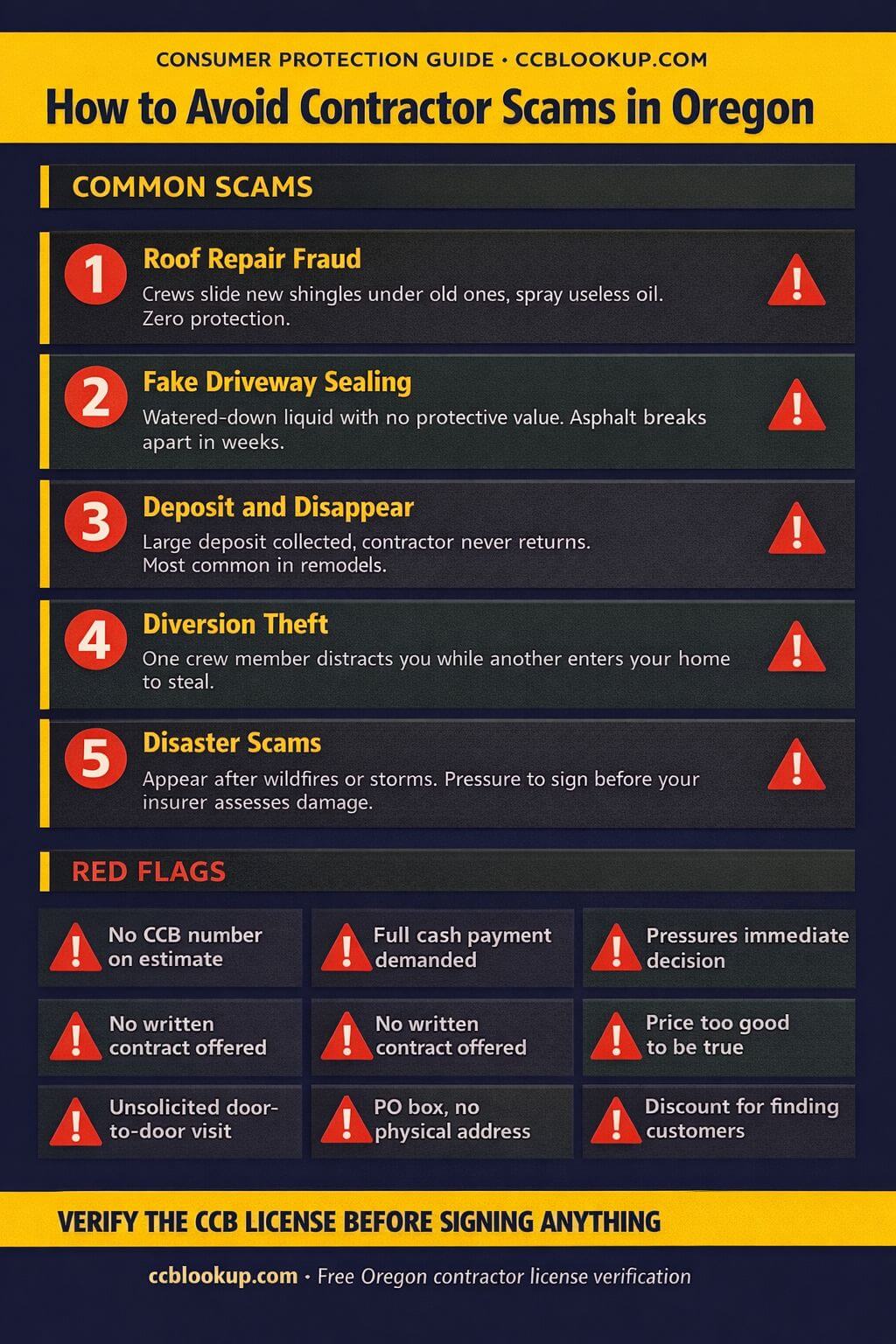
Roof repair scams
A crew shows up claiming your roof is damaged. They may slide a few new shingles under old ones, then spray the surface with a useless oil. The work looks done but provides zero protection. Always get a second opinion from a licensed residential contractor before authorizing any roof work.
Driveway and sealant scams
The contractor claims they have leftover materials from a nearby job and can seal your driveway or fence at a discount. The "sealant" is often watered-down liquid with no protective value. Paving scams are particularly common — a thin layer of asphalt that breaks apart within weeks.
Deposit-and-disappear scams
The contractor collects a large deposit — sometimes 50% or more — and never returns. This is especially common with kitchen and bathroom remodels. Oregon law does not set a maximum deposit amount, which is why verifying the license and bond before any payment is critical. A surety bond exists specifically to protect you in this situation.
Diversion theft
One member of the crew engages you in conversation while another enters your home to steal valuables. This is most common during unsolicited door-to-door visits. Never allow workers inside your home unless you have verified their identity and their employer's CCB license.
Disaster scams
After a wildfire, flood, or windstorm, scammers appear immediately offering emergency repairs. They pressure you to sign before your insurance adjuster has assessed the damage. We cover this in detail in our disaster contractor scams guide.
Red Flags to Watch For
- Unmarked vehicles with out-of-state plates
- No CCB license number on the estimate or business card
- Lists an 800 number and PO box — no physical address
- Uses scare tactics: "your roof will fail this winter"
- Offers a discount if you find them more customers
- Resists providing a written estimate or contract
- Asks for full payment upfront or cash only
- Price is significantly lower than other bids
- Pressures you to decide immediately
How to protect yourself
The Oregon CCB recommends these steps before hiring any contractor:
- Verify the CCB license. Every licensed Oregon contractor has a CCB number. Look it up before agreeing to any work. Confirm the license is Active and the bond and insurance haven't expired.
- Get multiple bids. At least three bids for any significant project. A price far below the others is a warning sign, not a bargain.
- Never pay the full amount upfront. A reasonable deposit is normal; full payment before work begins is not. Never pay in cash.
- Get everything in writing. A proper written contract should include scope of work, materials, start and completion dates, and a payment schedule.
- Check complaint history. The official CCB database shows the contractor's complaint and disciplinary history. CCB Lookup shows license, bond, and insurance — for complaint history visit search.ccb.state.or.us.
- Never be pressured. Any legitimate contractor will give you time to verify their credentials and compare bids. If they push for an immediate decision, walk away.
Frequently Asked Questions
Last updated: February 2026. Information sourced from the Oregon CCB Consumer Tools page.
Verify Before You Hire
A 30-second license check is the most effective scam prevention available.
Search CCB LicensesRelated Guides
Scam Protection Checklist
- Verified CCB license is Active
- Bond and insurance are current
- Got at least 3 bids
- Written contract in hand
- Did not pay full amount upfront
- Checked complaint history on CCB.gov
- Business name matches license